Cosmic Ghost Lights

Caroll Alvarado
| 15-04-2026
 · Art Team
Imagine you are standing on a quiet balcony, looking up at the velvet sky, and you see a brilliant streak of light.
You close your eyes, make a heartfelt wish for a promotion or a new car, and feel a sense of cosmic connection.
Well, I hate to break it to you, but you might be shouting your dreams into a graveyard. Due to the staggering vastness of the universe and the finite speed of light, that "shooting star" or that twinkling sun you are admiring likely ceased to exist thousands of years ago. We aren't looking at a live broadcast; we are staring at the universe's "Delayed Shipping" list, and the package was delivered (and destroyed) long before your great-great-grandparents were born.
The Speed Limit of Reality
Light is the fastest thing in existence, traveling at approximately 186,000 miles per second. In our tiny human world, this feels instantaneous. When you flip a switch, the room glows. But when we look at the heavens, the scale shifts from miles to light-years. The distance is so immense that even at maximum speed, photons take centuries to reach your eyes.
The sun is about 8 minutes away. If the sun suddenly vanished, we would continue to enjoy its warmth and light for nearly ten minutes, blissfully unaware of our impending doom. Now, apply that to the stars. Many of the visible lights in our night sky are thousands of light-years away. You are essentially watching a movie that finished its theatrical run before the invention of the wheel, yet here you are, still crying at the ending.
The Universe's Great Deception
When we observe the night sky, we are essentially looking through a time machine. We see the star Betelgeuse as it was around the 14th century. If it exploded yesterday, we wouldn't know for another 600 years. This creates a strange "interstellar fraud." We feel romantic, small, and inspired by objects that have already crumbled into dust.
Consider the irony: we write poems about the eternal constancy of the stars, yet they are the ultimate examples of transience. We are like fans obsessing over the social media profile of a celebrity who passed away decades ago, unaware that the "updates" we are seeing are just echoes of a long-gone life. The cosmos is the ultimate "catfish."
Living in the Afterglow
Why does this "cosmic delay" happen? It comes down to the fundamental physics of our reality:
1. The Light-Year Barrier: A light-year is the distance light travels in one year, roughly $5.88 \times 10^{12}$ miles. Most stars are dozens or hundreds of light-years away.
2. Expansion of Space: As the universe expands, the distance light must travel increases, stretching out the "delivery time" of the image.
3. Star Life Cycles: Massive stars burn bright and die young. By the time their light crosses the void to reach Earth, the fuel has often long since run out.
4. Atmospheric Refraction: Even the light that does make it to us is bent and twisted by our own air, adding one last layer of distortion to the ancient image.
A Cinema with No Audience
We are essentially sitting in a vast, dark theater, watching a film where the actors have already left the set and the studio has been demolished. It is a staggering thought that the "present moment" we experience on Earth is entirely disconnected from the "present moment" of the galaxy. When you wish upon a star, you aren't connecting with a living entity; you are connecting with a memory.
This realization shouldn't make the sky feel lonely; it should make it feel precious. The light you see tonight has survived a journey through freezing vacuums and cosmic dust clouds just to land on your retina. It is a postcard from the past, hand-delivered by physics.
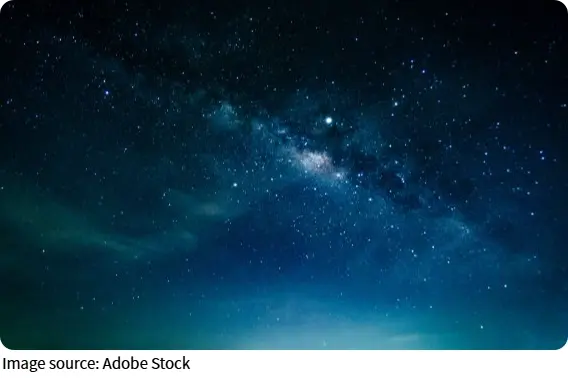
There is a profound humility in realizing that we are looking at a "ghost sky." It reminds us that our perspective is always limited by the speed of our own reality. We spend so much time worrying about the future or mourning the past, yet the very stars teach us that the past and the present are often the same thing depending on where you stand. The next time you look up, don't just see the light; appreciate the journey it took to get here. Even if the star is "cool" and dead, its story is still reaching out to us, proving that even after something is gone, it can still light up the world for those who are willing to look up and wonder.