Dance Beyond Words

Naveen Kumar
| 08-06-2026
 · Art Team
Indian dance is much more than movement. It is a fascinating blend of rhythm, storytelling, expression, and tradition that has evolved over thousands of years. Every turn, glance, and gesture can carry meaning. Some dances celebrate joy, some tell ancient tales, and others express emotions that words sometimes struggle to capture.
The wonderful part is that you do not need to be a professional performer to appreciate or learn from Indian dance. Many of its techniques can help develop coordination, observation, creativity, and confidence. Let us step into this colorful world and discover why it continues to captivate people around the globe.
The Hidden Language of Indian Dance
When many people first watch Indian dance, they notice the vibrant costumes and energetic movements. However, beneath the visual beauty lies a sophisticated language of expression. Once you understand a few basics, every performance becomes more meaningful and engaging.
Hands That Speak
One of the most fascinating features of Indian dance is the use of hand gestures, known as mudras. These gestures can represent objects, emotions, actions, animals, nature, or even entire ideas.
A single hand position may symbolize a flower, while another may represent a bird or flowing water. Combined with expressive movements, these gestures create a visual language.
A simple exercise can help illustrate this concept. Without speaking, use only your hands to show a bird flying, a flower opening, or rain falling. Invite someone to interpret the meaning. You will quickly discover how much information movement can communicate.
This activity also sharpens creativity and observation skills.
The Eyes Do More Than Look
In many Indian dance styles, the eyes are just as important as the feet.
Performers often move their eyes deliberately to direct attention, express emotion, or strengthen a narrative. A quick glance upward, sideways, or downward can completely change the message of a scene.
You can practice eye control in front of a mirror. Look left, right, up, and down while keeping your head still. Then add different emotions such as surprise, curiosity, excitement, or calmness.
At first, it may feel unusual, but you may gain a new appreciation for how expressive the human face can be.
Rhythm Lives Everywhere
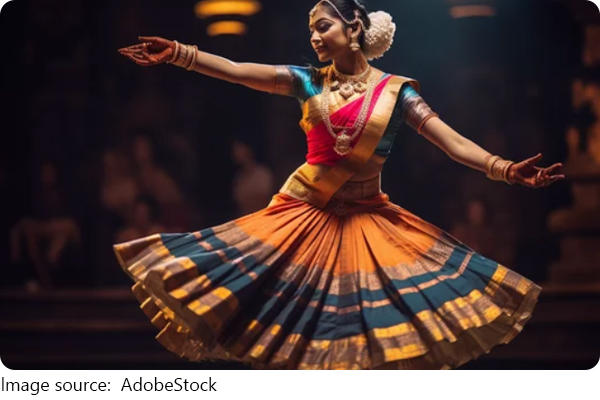
Indian dance places great importance on rhythm. Dancers often learn to recognize complex patterns and synchronize movements with music.
One effective exercise is to tap a simple rhythm on a table. Start with four beats. Then create a different pattern using pauses and accents. Notice how even a small change creates a completely different feeling.
This skill is useful beyond dance. Rhythm can help improve timing, coordination, and concentration.
You may begin hearing patterns in footsteps, rain, train wheels, or even the ticking of a clock.
Stories Without Words
Many Indian dance traditions present complete narratives without spoken dialogue. Through carefully crafted gestures, expressive movements, and choreography, performers guide audiences through adventures, celebrations, relationships, and a wide range of emotions.
Try watching a short scene from a silent film. Without listening to dialogue, focus only on actions and expressions. You may notice how effectively visual performance can convey ideas.
This artistic tradition applies the same principle with remarkable detail and precision.
Fun Ways to Experience Indian Dance Yourself
You do not need a stage or years of training to enjoy some of the techniques behind Indian dance. Many ideas can be explored through simple activities that make everyday life more creative and engaging.
Learn Three Simple Gestures
Choose three basic concepts such as the sun, a flower, and a bird.
Create your own hand gesture for each one. Practice switching smoothly between them while imagining a short sequence.
For example, the sun rises, a flower blooms, and a bird flies across the sky.
This simple exercise improves coordination while introducing the artistic spirit found in many Indian dance traditions.
Turn Walking Into Dance Practice
One reason dancers move so gracefully is that they pay attention to how they place their feet.
During your next walk, notice your steps. Try walking slowly for ten steps, then quickly for ten steps. Experiment with making movements lighter, smoother, or more energetic.
You are not performing a dance routine. You are simply becoming more aware of movement.
Many dancers begin by developing this awareness before learning complex choreography.
Create an Expression Challenge
Indian dance often relies on expressive visual communication.
Stand in front of a mirror and try showing happiness, curiosity, determination, surprise, and excitement without speaking.
Then ask someone to identify the emotions.
This exercise may feel unfamiliar at first, but it helps develop communication skills and confidence. It also helps you understand how performers connect emotionally with audiences.
Discover the Art of Observation
Great dancers are often excellent observers.
They study people, animals, weather, and daily life to make their performances feel authentic. A graceful arm motion may be inspired by flowing water. A quick movement might resemble a bird taking flight.
Try spending five minutes observing something in nature. Watch leaves moving in the wind or clouds drifting across the sky.
Then imitate the movement with your hands or arms.
You are practicing one of the oldest artistic skills: learning from the world around you.
Build a Mini Dance Sequence
One valuable exercise is creating a short sequence using only movement.
Choose three actions, such as planting a seed, watching it grow, and seeing a flower bloom.
Use gestures, expressions, and movement to present the sequence in less than one minute.
The goal is not perfection. The goal is clear expression.
You may discover that creativity becomes even more powerful when words are removed.
Why Indian Dance Remains Special
Indian dance continues to thrive because it combines many art forms at once. It includes music, rhythm, visual design, narrative, movement, and emotion.
Each performance creates a unique connection between artists and audiences. Even when viewers do not understand every symbolic gesture, they often connect with the energy, artistry, and beauty.
This universal quality allows the art form to cross cultures and generations.
This enduring appeal helps explain why it continues to be appreciated after thousands of years.
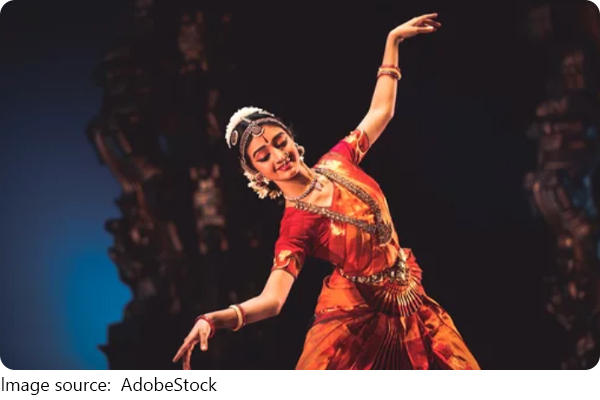
Indian dance is far more than a sequence of movements. It is a sophisticated art form that brings together rhythm, observation, emotion, visual symbolism, and cultural tradition. From symbolic hand gestures to carefully controlled eye movements and body language, each element contributes to a rich and engaging performance.
The next time you watch an Indian dance performance, look beyond the costumes and music. You may discover a remarkable world where gestures convey ideas, expressions reveal emotions, and every presentation becomes a celebration of creativity, artistry, and human connection.